While this famous slogan made diamonds a symbol of luxury, in the world of advanced engineering and electronics they are known by a more rigorous name—
diamond.
Composed of carbon atoms arranged in a highly ordered tetrahedral lattice with strong covalent bonds, diamond possesses a near-perfect internal structure. As a result, it exhibits both the highest hardness and the highest thermal conductivity known in nature. With the rapid evolution of high-power electronics, AI computing, 5G/6G communications, and advanced packaging technologies, diamond is emerging as a core material for high-end thermal management.
1. Why Diamond Represents the Ultimate Thermal Management Material
1.1 Exceptional Thermal Conductivity
Diamond typically exhibits a thermal conductivity of
2000–2200 W/(m·K), far exceeding that of copper (~400 W/(m·K)) and aluminum (~230 W/(m·K)). It is widely recognized as the most thermally conductive material available.
Unlike metals, where heat transfer is dominated by free electrons, thermal transport in diamond is governed primarily by phonons (lattice vibrations). The strong covalent bonds and highly ordered crystal lattice result in minimal phonon scattering, enabling heat to propagate rapidly and efficiently—much like a frictionless high-speed transport system.
This unique mechanism allows diamond to maintain outstanding thermal performance even under high-temperature and high-power-density conditions.
1.2 Ultra-Low Thermal Expansion: A Critical Advantage in Packaging
In advanced electronic packaging, thermal expansion coefficient (CTE) matching is essential. Large CTE mismatches between materials can cause warping, delamination, and increased interfacial thermal resistance during thermal cycling, severely degrading heat dissipation performance.
Diamond features an extremely low CTE, making it highly compatible with semiconductor devices and substrates. This property significantly enhances interface reliability and long-term stability, especially in high-performance and high-reliability systems.
1.3 Outstanding Thermal and Chemical Stability
Diamond remains structurally and chemically stable in extreme environments, including high temperatures, corrosive conditions, and radiation exposure. It resists melting, deformation, and degradation, making it an ideal solution for long-life, high-reliability electronic systems.
For these reasons, diamond is often described as the “all-around champion” among thermal management materials.

2. Diamond-Based Thermal Management Material Platforms
To address diverse application requirements, diamond has evolved into several material forms. Among them, single-crystal diamond, polycrystalline diamond, and diamond thin films form the foundation of advanced thermal management solutions.
Single-crystal diamond features a perfectly ordered lattice with minimal defects, enabling phonons to travel with minimal scattering. This results in thermal conductivity approaching the theoretical limit.
Key advantages:Extremely high intrinsic thermal conductivity
Ultra-low defect density
Exceptional thermal and dimensional stability
Typical applications:High-power laser heat spreaders
RF and optoelectronic devices
Research-grade and extreme-environment thermal solutions
Single-crystal diamond defines the upper performance limit of diamond thermal materials.
2.2 Polycrystalline Diamond: The Optimal Balance of Performance and Scalability
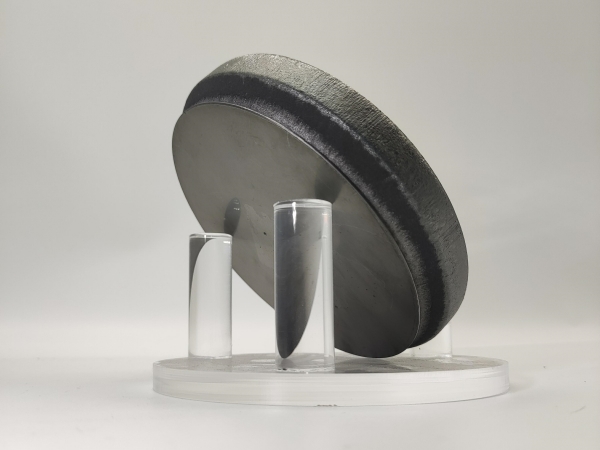
Polycrystalline diamond, typically produced via chemical vapor deposition (CVD), offers outstanding thermal performance while enabling larger-area substrates and more cost-effective manufacturing.
Key advantages:Thermal conductivity far exceeding conventional metals
Availability in larger sizes
Well suited for industrial-scale applications
Typical applications:Heat spreaders for power electronic devices
Semiconductor and computing chip cooling
Aerospace and defense electronics
Polycrystalline diamond serves as the critical bridge between laboratory-grade performance and large-scale engineering applications.
2.3 Diamond Thin Films: Enabling Advanced Packaging and Integration
Diamond thin films, deposited by CVD on various substrates, combine exceptional thermal conductivity with high design flexibility. They are particularly attractive for integration with modern semiconductor technologies.
Key advantages:Compatible with Si, SiC, and GaN platforms
Ultra-thin yet highly efficient heat dissipation
Effective reduction of device junction temperatures
Typical applications:Chip-level heat spreading layers
High-power GaN and SiC devices
Advanced packaging and heterogeneous integration
Diamond thin films are emerging as a key technology for next-generation high-power chip thermal management.

3. Conclusion: Diamond Is Reshaping the Thermal Management Landscape
From single crystals to polycrystalline structures, and from bulk materials to thin films, diamond is redefining what is possible in thermal management. While challenges related to fabrication complexity and cost remain, ongoing technological advances and increasing adoption by end users are accelerating diamond’s transition from a niche, premium material to a strategic solution for extreme thermal challenges.
In fields such as 5G/6G communications, AI processors, high-power modules, electric vehicles, and aerospace systems, diamond is rapidly becoming an indispensable material for managing ever-increasing heat loads.
About JXT Technology Co., Ltd.
JXT Technology Co., Ltd. specializes in the development and industrialization of advanced diamond materials. The company provides high-quality single-crystal diamond,
polycrystalline diamond, and diamond thin film products tailored for high-end thermal management and electronic applications.
By leveraging diamond—the ultimate material for heat dissipation—JXT Technology is committed to helping customers overcome the most demanding thermal challenges and enabling the next generation of high-power and high-performance electronic systems.