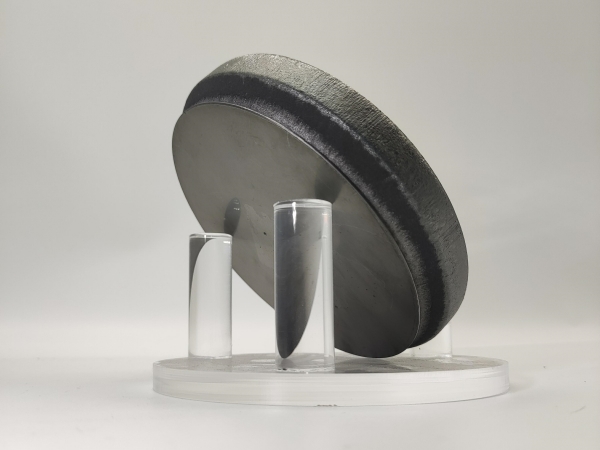
Among third-generation semiconductor materials, silicon carbide (SiC) is undoubtedly one of the brightest stars. In particular, the 6-inch (150 mm) 4H-N type SiC substrate has become the core material driving progress in power electronics, electric vehicles, and advanced manufacturing, thanks to its outstanding physical properties and maturing fabrication technology.
Why 4H-N Silicon Carbide?
Compared to traditional silicon (Si), SiC offers unique advantages: a wide bandgap (3.26 eV), high thermal conductivity, high breakdown electric field strength, and fast electron drift velocity. These attributes enable devices to operate at higher voltages, higher efficiencies, and elevated temperatures while remaining smaller and more robust.
Among the many polytypes of SiC, 4H-SiC is the most widely used for power device fabrication due to its superior electron mobility and stable crystal structure. When doped to form N-type substrates (4H-N), it becomes the foundation for MOSFETs, Schottky diodes (SBDs), IGBTs, and other high-performance devices.
The Value of 6 inch Substrates
In the early stages, SiC wafers were limited to 2-inch and 3-inch sizes, later expanding to 4-inch. Today, 6-inch wafers have emerged as the mainstream standard in industrial production:
- Higher yield and consistency: Larger diameter supports mass production and lowers per-device cost.
- Fab compatibility: 6-inch process lines are mature and well-established, ensuring seamless integration and scalability.
- Meeting surging demand: The explosive growth of EVs, photovoltaic inverters, and fast-charging infrastructure aligns perfectly with the adoption of 6-inch SiC substrates.
Application Outlook
6-inch 4H-N SiC substrates are already enabling innovation in critical sectors:
- Electric Vehicles (EVs): Essential for main drive inverters, on-board chargers (OBC), and DC/DC converters, helping extend range and boost efficiency.
- Renewable Energy: Improving efficiency and reducing footprint in solar inverters and wind power systems.
- 5G & Data Centers: Lowering energy consumption and improving thermal management for high-performance power systems.
- Industrial & Aerospace: Delivering stable and reliable operation in extreme high-voltage, high-power environments.
Future Trends
As 6-inch capacity expands and yields improve, the cost of SiC substrates is steadily decreasing, driving wider adoption across industries. While
8-inch SiC wafers are under development, challenges remain in yield and cost control. For the near future, however, 6 inch 4H-N SiC substrates will remain the market’s backbone, laying the foundation for the rapid growth of third-generation semiconductors.
Conclusion
The 6 inch 4H-N silicon carbide substrate is more than just a wafer—it is the cornerstone of an energy-efficient revolution. Whether in the electrification of transportation, the scaling of green energy, or the advancement of high-end industrial technologies, SiC substrates are enabling breakthroughs behind the scenes.