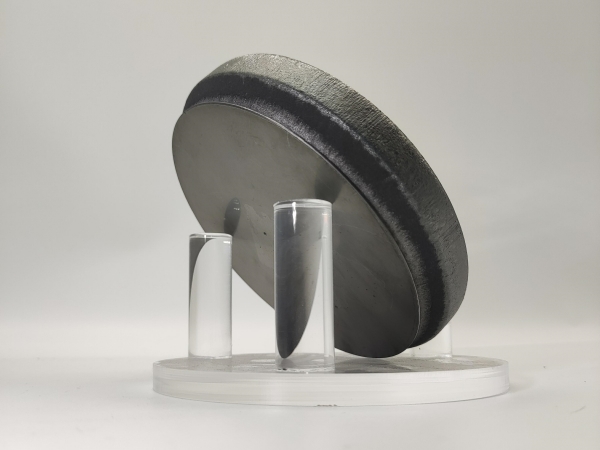
Introduction: Why Semi-Insulating SiC Matters
Semi-insulating silicon carbide (SI-SiC) substrates play a critical role in RF, microwave, and high-power electronic applications. With their:
- Wide bandgap
- High thermal conductivity
- High breakdown electric field
- Excellent microwave stability
SI-SiC substrates have become the preferred foundation for GaN HEMT devices and high-frequency power amplifiers.
Among the various SiC polytypes, 4H-SiC and 6H-SiC are two important hexagonal crystal structures. While both have been used historically, 4H semi-insulating SiC has emerged as the industry standard.
This article provides a comprehensive technical comparison between 4H and 6H
semi-insulating SiC and explains the industry shift toward 4H.
1. Crystal Structure Differences Between 4H and 6H SiC
Silicon carbide is a polytypic material, meaning it exists in multiple crystal structures distinguished by their stacking sequence of Si–C bilayers.
| Parameter |
4H-SiC |
6H-SiC |
| Crystal system |
Hexagonal |
Hexagonal |
| Stacking periodicity |
4 layers |
6 layers |
| Bandgap (300K) |
~3.26 eV |
~3.02 eV |
| Electron mobility |
Higher |
Lower |
| Anisotropy |
Lower |
More pronounced |
Key Implications
4H-SiC has a wider bandgap
4H-SiC exhibits significantly higher electron mobility
6H-SiC shows stronger anisotropic transport behavior
These structural differences directly impact high-frequency and high-power device performance.
2. Semi-Insulating Mechanisms: Deep Level Compensation
Semi-insulating SiC achieves high resistivity (10⁷–10¹¹ Ω·cm) through deep-level compensation mechanisms.
Two main approaches are used:
1. Vanadium (V) Doping
Vanadium introduces deep acceptor levels in the bandgap, trapping free carriers and compensating residual impurities.
2. High-Purity Semi-Insulating (HPSI) Technology
Instead of heavy transition-metal doping, HPSI substrates rely on ultra-low impurity control and intrinsic defect engineering to achieve high resistivity with lower microwave loss.
Resistivity up to 10⁸–10¹¹ Ω·cm
Stable deep-level centers
Low microwave loss
Excellent RF linearity
Industry standard for GaN epitaxy
Characteristics of 6H Semi-Insulating SiC
Typical resistivity: 10⁷–10⁹ Ω·cm
Different deep-level positions
Higher RF loss compared to 4H
Gradually phased out of mainstream RF applications
3. Electrical Performance Comparison
| Property |
4H SI-SiC |
6H SI-SiC |
| Bandgap |
Wider |
Narrower |
| Electron mobility |
~900–1000 cm²/V·s |
~400–500 cm²/V·s |
| Breakdown field |
Higher |
Slightly lower |
| Microwave loss |
Lower |
Higher |
| Thermal conductivity |
Similar (~4.5 W/cm·K) |
Similar |
Why Mobility Matters in RF Devices
Higher electron mobility improves:
High-frequency response
Power efficiency
Linearity
Gain performance
This makes 4H semi-insulating SiC particularly well suited for:
5G and emerging 6G base stations
Radar systems
Satellite communications
High-power microwave modules
4. Defect Density and Material Maturity
Crystal defects such as micropipes, threading dislocations, and basal plane dislocations (BPDs) significantly impact device reliability.
Substantially reduced micropipe density
Lower dislocation density with modern growth techniques
Mature epitaxial compatibility for GaN
Strong global supply chain
6H-SiC
Earlier industrial maturity in the 1990s
Performance limitations in high-frequency applications
Gradually replaced by 4H in advanced RF markets
5. Industry Transition: Why 4H Became the Standard
Over the past two decades, the semiconductor industry has transitioned from 6H to 4H for several reasons:
Superior RF performance
Lower microwave loss
Better GaN epitaxial compatibility
Higher electron mobility
Scalable manufacturing for 6-inch and 8-inch wafers
Today, 4H semi-insulating SiC dominates the GaN-on-SiC ecosystem for RF and microwave devices.
6H semi-insulating SiC is now primarily of historical significance.
6. Final Comparison Summary
| Application Area |
Preferred Polytype |
| RF Power Devices |
4H |
| GaN HEMT Substrates |
4H |
| High-Power Electronics |
4H |
| Future Industry Roadmap |
4H |
Overall Conclusion
In modern RF and high-power electronics, 4H semi-insulating silicon carbide has become the definitive industry standard, while 6H represents an earlier generation technology that has largely been phased out.
7. Future Outlook for Semi-Insulating SiC
Key development directions include:
Ultra-low defect density substrates
Advanced HPSI optimization
8-inch wafer scale production
Further microwave loss reduction
Material engineering for mmWave and beyond
As RF frequencies continue to increase and power density requirements rise, substrate material quality will remain a critical competitive factor.
If your company is developing:
GaN HEMT devices
RF power amplifiers
Microwave modules
High-power electronic systems
Selecting the right
semi-insulating SiC substrate can directly impact device efficiency, reliability, and long-term scalability.
For technical consultation or customized substrate solutions, feel free to contact our engineering team.