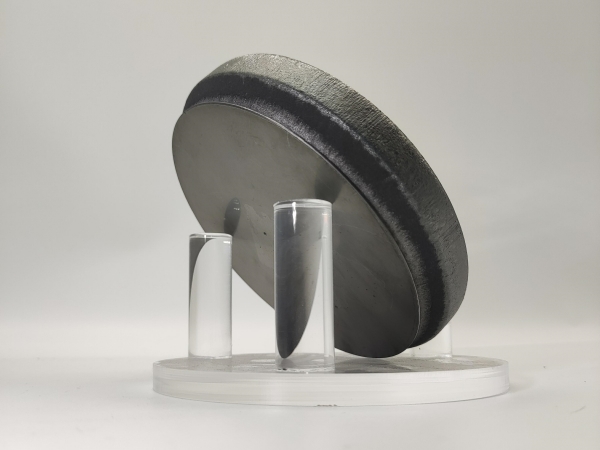
As a third-generation semiconductor material, silicon carbide (SiC) not only offers the advantages of a wide band gap but also exhibits excellent thermal conductivity. In electric vehicles, electronic components typically generate significant heat during operation. Without effective heat dissipation, this heat can negatively impact both the performance stability and service life of the vehicle. Thanks to its superior thermal conductivity, silicon carbide is well-suited to address these thermal management challenges.
Silicon carbide wafers are generally classified into two types: N-type (conductive) and semi-insulating (HPSI). These two types exhibit different thermal conductivities, as shown below:

In heteroepitaxy, the substrate is more than a mechanical support. On r-plane sapphire &...
Epitaxial lateral overgrowth (ELO) is a classic approach for reducing defects in nitride...
Why Non-Polar GaN? The 5G and Power Electronics DriverWith the rollout of 5G mobile comm...