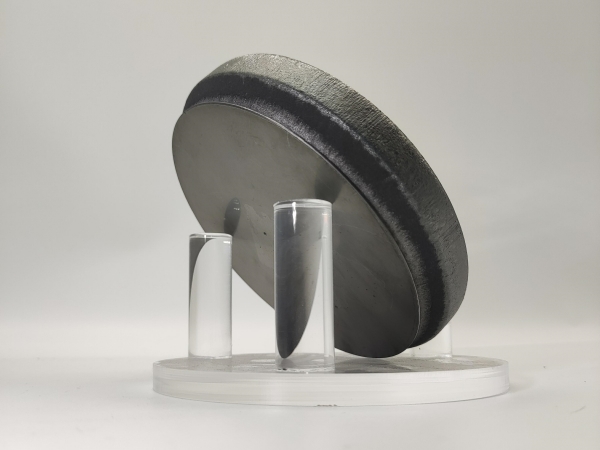
With the rapid development of optoelectronics, semiconductor manufacturing, laser technology, and infrared imaging, optical materials are evolving from “general-purpose” solutions toward application-specific customization. Different application scenarios impose fundamentally different requirements on transmission wavelength range, optical homogeneity, thermal stability, mechanical strength, and manufacturability. Among the many available optical materials, sapphire, fused silica, and silicon wafers have emerged as the three most representative foundational materials in today’s industry, each distinguished by unique performance advantages.
This article presents a systematic comparison of these materials from the perspectives of material properties, optical performance, engineering characteristics, and typical applications, and provides guidance for material selection in engineering practice.

1. Material Background and Structural Differences
Sapphire is essentially
single-crystal aluminum oxide (Al₂O₃) with a hexagonal crystal structure, offering exceptional hardness and outstanding thermal resistance.
Fused silica is
amorphous silicon dioxide (SiO₂), well known for its extremely high optical purity and thermal stability.
Silicon wafers are made of
single-crystal silicon (Si), forming the cornerstone of the modern semiconductor industry and playing an irreplaceable role in infrared optics and integrated photonics.
Differences in crystal structure directly determine the fundamental distinctions among these materials in terms of optical homogeneity, birefringence, thermal response, and processing behavior.
2. Optical Performance: The Key Factor Defining Application Boundaries
2.1 Transmission Wavelength Range
In terms of spectral coverage, sapphire offers the
widest transmission window, spanning from deep ultraviolet to mid-infrared (approximately 150 nm–5.5 μm), making it highly suitable for high-power laser systems and optical windows operating in harsh environments.
Fused silica exhibits exceptionally high transmittance in the
ultraviolet–visible–near-infrared range (approximately 180 nm–3.5 μm) and is the material of choice for high-precision optical systems and UV applications.
Silicon wafers are essentially opaque in the visible range but become transparent in the infrared region beyond approximately
1.1 μm, making them particularly well suited for mid- and long-wave infrared systems and infrared sensing applications.
2.2 Refractive Index and Optical Homogeneity
Both sapphire and silicon are
high-refractive-index materials, offering advantages in beam control and compact optical component design.
Fused silica, with its lower refractive index, is more favorable for reducing interface reflections and optical aberrations.
In terms of optical homogeneity, fused silica benefits from its amorphous structure and is virtually free of birefringence, providing a significant advantage in high-precision imaging and interferometric systems. Sapphire, by contrast, exhibits crystallographic birefringence, which places higher demands on optical system design and orientation control.
3. Mechanical and Thermal Properties: The Foundation of Engineering Reliability
From a mechanical perspective, sapphire has a Mohs hardness of
9, second only to diamond, and demonstrates exceptional scratch resistance and impact strength. Fused silica has moderate hardness, while silicon wafers fall between the two but exhibit more pronounced brittleness.
Thermal properties reveal even more pronounced differences:
Sapphire can operate stably at temperatures exceeding
1600 °C, making it suitable for extreme high-temperature environments.
Fused silica has an extremely low coefficient of thermal expansion, resulting in minimal thermal deformation under temperature fluctuations—an ideal characteristic for high-stability optical systems.
Silicon features very high thermal conductivity, making it particularly advantageous for optoelectronic integration and infrared systems with stringent heat dissipation requirements.
4. Manufacturability and Cost Considerations
From an engineering implementation standpoint, processing difficulty and cost often directly affect the adoption of a material.
Sapphire’s extreme hardness makes machining and polishing challenging and costly, confining its use primarily to high–value-added applications. Fused silica offers good machinability and can achieve very high surface quality, with moderate overall cost. Silicon wafers, benefiting from a highly mature semiconductor manufacturing ecosystem, have the most advanced processing technologies, the lowest cost, and the largest available sizes, giving them a clear advantage in large-scale applications.
5. Typical Application Scenarios
Sapphire
Widely used in
GaN-on-sapphire LED epitaxial substrates, high-power laser windows, military and aerospace optical windows, and protective cover plates for consumer electronics—applications that emphasize high strength and high reliability.
Fused Silica
A core material for
lithography lenses, precision laser systems, UV optical components, interferometric systems, and high-end metrology equipment, representing the industry standard for high-precision optics.
Silicon Wafers
Occupy a central position in
infrared windows, infrared imaging systems, silicon photonic chips, MEMS optical devices, and diffractive optical elements (DOE), serving as a key platform for the integration of optics and electronics.
6. Summary of Engineering Selection Principles
In practical engineering, there is no universal optical material solution. Material selection should be guided by application-specific priorities:
High strength, wide spectral range, and extreme-environment reliability → Sapphire
High optical uniformity, low thermal distortion, and high imaging precision → Fused Silica
Infrared transmission, system integration, and cost efficiency →
Silicon Wafers
Conclusion
Sapphire, fused silica, and silicon wafers represent three distinct development directions:
extreme performance,
high-precision optics, and
integrated optoelectronics, respectively. As application scenarios continue to diversify, these materials are not substitutes for one another, but rather complementary solutions that continue to deepen their roles in their most suitable domains. For engineers and system designers, a thorough understanding of intrinsic material properties is essential to achieving optimal optical system performance and reliability.