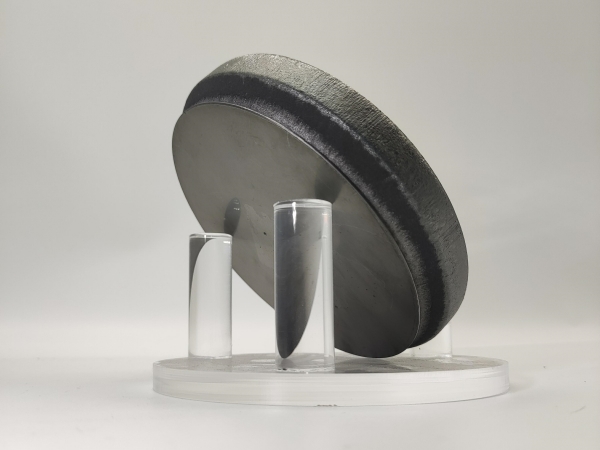
Borosilicate glass BF33 (with Schott BOROFLOAT® 33 as the industry benchmark) is a key special material in semiconductor processes, widely used in core links such as MEMS packaging, wafer-level bonding, and advanced packaging interposers. Its thermal expansion characteristics and thermal stability are directly related to the preparation accuracy, structural integrity and reliability of semiconductor devices, thereby exerting a decisive impact on process yield. Semiconductor processes have extremely high requirements for temperature control accuracy; even minor deviations in temperature fluctuations or material thermal performance mismatch may lead to device defects and reduce yield. The core thermal properties of BF33 are precisely adapted to the harsh requirements of semiconductor processes, while its performance abnormalities can become a bottleneck for yield.

I. Impact of Thermal Expansion Characteristics on Semiconductor Process Yield
The core thermal performance index of BF33 is the coefficient of thermal expansion (CTE), whose standard value is 3.25-3.3×10⁻⁶/K (20-300℃). This value is highly matched with monocrystalline silicon (3.2×10⁻⁶/K), which is the core advantage of its adaptation to semiconductor processes. Deviations in the thermal expansion coefficient or mismatch with other materials will affect yield in multiple key links.
(1) Positive Impact: Thermal Expansion Matching Ensures Process Accuracy and Improves Yield
1. Wafer-level bonding link: In semiconductor packaging,
BF33 is often combined with silicon wafers through anodic bonding technology to form a hermetic packaging structure (such as MEMS inertial sensors and pressure sensor packaging). Since the thermal expansion coefficients of BF33 and silicon are almost the same, during the high-temperature bonding process (usually 300-450℃) and the subsequent cooling process, the volume contraction/expansion ranges of the two are synchronized, which can effectively reduce interface thermal stress and avoid defects such as bonding cracks, delamination and bubbles, greatly improving bonding yield. If the thermal expansion is mismatched, it will cause huge thermal stress at the interface (σ = E × α × ΔT), directly leading to bonding failure and a significant increase in device scrap rate.
2. Thin film deposition and annealing link: In semiconductor processes,
BF33 can be used as a substrate or mask material to participate in thin film deposition (such as PECVD dielectric film) and high-temperature annealing processes. Its low thermal expansion coefficient ensures excellent substrate dimensional stability during high-temperature processes (up to 450℃ for long-term use and 500℃ for short-term use), and will not cause a decrease in surface flatness due to thermal expansion (BF33 itself has extremely high flatness due to the float glass process), thereby ensuring the uniformity of thin film deposition and the accuracy of pattern transfer. Especially in advanced processes, the thin film thickness and line width have reached the nanometer level; even slight thermal expansion deformation of the substrate may lead to line offset and thin film cracking, while the low thermal expansion characteristics of BF33 can effectively avoid such defects and improve process yield.
3. Advanced packaging link: In 2.5D/3D packaging, as a TSV carrier or interposer material, the matching of BF33's thermal expansion coefficient with silicon and chip packaging materials can avoid carrier warpage and chip offset caused by differences in thermal expansion of different materials during the packaging reflow soldering process (250-300℃), ensure the reliability of interconnection lines, reduce defects such as short circuits and poor contact, and guarantee packaging yield.
(2) Negative Impact: Yield Loss Caused by Abnormal Thermal Expansion
1. Excessive deviation of thermal expansion coefficient: If the thermal expansion coefficient of
BF33 deviates from the standard range (such as higher than 3.4×10⁻⁶/K or lower than 3.2×10⁻⁶/K), its matching with silicon will decrease. During the thermal cycle of high-temperature processes, unreleasable thermal stress will be generated, leading to wafer warpage, glass substrate cracking, or bonding interface peeling. Such defects will directly lead to device scrapping and a significant decrease in yield. According to industry experience, for every 0.1×10⁻⁶/K deviation in the thermal expansion coefficient, the bonding yield may decrease by 3%-5%.
2. Insufficient thermal expansion uniformity: If there are differences in thermal expansion uniformity inside the
BF33 glass, during the high-temperature process, the expansion/contraction ranges of different regions will be inconsistent, leading to local deformation and stress concentration of the substrate, and then causing thin film delamination and line breakage. It is particularly more significant for large-size wafers (such as 8-inch and 12-inch), which will increase the defect rate of the edge area and reduce the overall yield.
II. Impact of Thermal Stability on Semiconductor Process Yield
The thermal stability of BF33 is mainly reflected in thermal shock resistance, high-temperature dimensional stability and long-term high-temperature service stability. Its core indicators include softening point (820℃), annealing point (560℃), strain point (518℃) and thermal shock temperature difference (able to withstand 200-300℃ sudden changes). These characteristics directly determine its adaptability in semiconductor high-temperature processes, thereby affecting process yield.
(1) Positive Impact: Excellent Thermal Stability Ensures Process Reliability and Reduces Defect Rate
1. Thermal shock resistance avoids sudden cooling and heating defects: In semiconductor processes, there are sudden temperature changes in multiple links (such as rapid cooling after high-temperature annealing and cooling after plasma etching). BF33 can withstand severe temperature differences of 200-300℃ without cracking, chipping and other problems. For example, in MEMS sensor packaging, the bonded devices need to undergo multiple sudden temperature change tests. The high thermal shock resistance of BF33 can avoid damage to the packaging cavity, ensure device hermeticity, and reduce yield loss caused by sealing failure; at the same time, in the glass substrate processing (such as laser etching through holes), local high temperature will not cause substrate cracking, improving processing yield.
2. High-temperature dimensional stability ensures process accuracy: The softening point of
BF33 is as high as 820℃, which is much higher than the conventional high temperature in semiconductor processes (such as 400-800℃ for epitaxial growth and annealing). During long-term high-temperature service (≥10h, 450℃), it will not soften or deform, and can maintain dimensional stability and surface flatness for a long time. This is crucial for processes that require long-term high-temperature operation (such as MOCVD epitaxy), which can avoid defects such as uneven thin film thickness and line offset caused by substrate deformation, improve the consistency of device performance, and then improve yield.
3. Thermal stability improves long-term reliability of devices: During repeated thermal cycles (such as high and low temperature cycles in packaging testing), the performance of
BF33 will not degrade, and there will be no crystallization, cracking and other problems, which can ensure the long-term reliability of semiconductor devices. If the material thermal stability is insufficient, structural defects will occur after repeated thermal cycles, leading to device failure in subsequent use, indirectly increasing process rework rate and reducing overall yield.
(2) Negative Impact: Yield Bottleneck Caused by Insufficient Thermal Stability
1. Insufficient thermal shock resistance: If the thermal shock resistance of
BF33 is not up to standard (such as thermal shock temperature difference lower than 150℃), it will crack and chip in the sudden temperature change link of the process, especially for
thin BF33 wafers (thickness < 170μm), which have a higher risk of damage, directly leading to substrate scrapping, increasing production costs and reducing yield. For example, during the rapid drying process after wafer cleaning, sudden temperature rise and fall may cause
BF33 substrate cracking. If the damage rate reaches 5%, it will directly lead to a decrease of more than 5 percentage points in the overall yield.
2. Insufficient high-temperature stability: If BF33 softens and crystallizes during long-term high-temperature processes, it will lead to decreased surface flatness and reduced light transmittance (the conventional light transmittance of BF33 is > 90%), affecting links that rely on optical accuracy such as photolithography and thin film deposition, leading to pattern transfer deviation and uneven thin film deposition, and then resulting in abnormal device performance (such as leakage and signal interference), increasing the defective rate. In addition, if the stress release is uneven at high temperatures, it will also lead to substrate warpage, affecting the accuracy of subsequent bonding, cutting and other processes, and further reducing yield.
3. Thermal fatigue failure: During long-term repeated thermal cycles, if the thermal stability of
BF33 is insufficient, thermal fatigue cracking will occur, especially in stress concentration areas such as substrate edges or through holes. Cracking will lead to packaging failure and line short circuits. Such defects are mostly hidden defects, which can only be found in subsequent tests, greatly increasing test costs and rework rates, and indirectly reducing process yield.
III. Summary: Core Impact Logic of Thermal Expansion and Thermal Stability on Yield
The thermal expansion characteristics of
BF33 (low thermal expansion, matching with silicon, uniformity) determine the "dimensional accuracy and interface compatibility" in semiconductor processes, and the thermal stability (thermal shock resistance, high-temperature dimensional stability, thermal fatigue resistance) determines the "process adaptability and device reliability". Both together form the core foundation for BF33 to adapt to semiconductor processes.
When the thermal expansion coefficient of BF33 matches silicon and the thermal stability meets the standard, it can effectively avoid core problems such as bonding cracks, substrate deformation and thin film defects, ensure the accuracy and reliability of each process link, and significantly improve the semiconductor process yield; on the contrary, if the thermal expansion coefficient deviates and the thermal stability is insufficient, it will directly lead to substrate damage, device failure and increased rework rate, becoming a key bottleneck restricting yield.
Therefore, in semiconductor processes, selecting BF33 materials that meet the standards (DIN ISO 3585 and EN 1748 T 1) and strictly controlling their thermal expansion coefficient and thermal stability indicators are important prerequisites for ensuring semiconductor process yield. At the same time, optimizing thermal cycle parameters according to process requirements can further give play to the thermal performance advantages of
BF33 and maximize the yield.