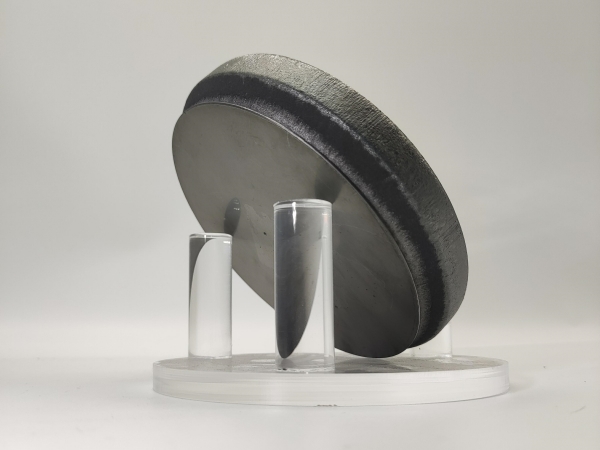
Quartz wafers, primarily made of fused or synthetic quartz, are indispensable core materials in advanced semiconductor packaging, optoelectronic integration, and MEMS manufacturing. Their unparalleled properties—including ultra-low thermal expansion, high chemical stability, superior electrical insulation, optical transparency, and precision machinability—make them ideal substrates and carriers for next-generation electronic devices.

I. Core Properties of Quartz Wafers
The advantages of quartz wafers in packaging stem from their unique material properties, which meet high-end packaging’s strict requirements for stability and performance:
- High Purity and Chemical Stability: Composed mainly of SiO₂, it is acid- and alkali-resistant, maintaining stability in harsh processing environments and avoiding harmful chemical reactions.
- Low Thermal Expansion Coefficient: At ~0.55×10⁻⁶/℃, it matches silicon (2.6×10⁻⁶/℃) and optical fibers, reducing thermal stress and preventing device warpage or cracking.
- Excellent Electrical Insulation: With resistivity >10¹⁶ Ω·cm, it is suitable for high-frequency, high-power devices, avoiding leakage and ensuring signal stability.
- Optical Transparency: It has low optical loss (<0.1 dB/cm) in 1310/1550 nm communication bands, adapting to optoelectronic packaging needs.
- Precision Processability: It enables microvia drilling and etching, meeting the needs of miniaturized packaging structures.
II. Key Application Scenarios
(1) Advanced Semiconductor Packaging
In 2.5D/3D packaging, quartz acts as high-performance interposers and TSV carriers. Its low dielectric constant (~3.8) reduces signal crosstalk, suitable for 5G/6G high-frequency chips. As TSV carriers, it ensures reliable vertical interconnections with minimal thermal deformation.
(2) Wafer-Level Packaging (WLP)
Quartz serves as a temporary carrier for ultra-thin wafer processing (down to 80 μm), preventing damage during backside thinning. For heterogeneous integration, it bridges CTE mismatches between
silicon, SiC, and GaN chips, enabling stable co-packaging.
(3) MEMS and Sensor Packaging
Its mechanical stability makes it ideal for MEMS gyroscopes and accelerometers. It forms hermetic seals via anodic bonding, protecting fragile microstructures. In quartz resonators, it eliminates CTE mismatches, ensuring high frequency stability.
(4) Optoelectronic and RF Packaging
As waveguide substrates, quartz enables low-loss light propagation in PLCs and quantum chips. For RF devices, its low dielectric loss boosts Q-factors, reducing signal attenuation for 5G/6G filters and antennas.
(5) High-End Specialized Packaging
It meets automotive-grade standards (-40°C to 125°C) for stable oscillators and sensors. In quantum computing, its low spontaneous fluorescence noise provides a noise-free environment for superconducting qubits.
III. Technical Trends
With the development of packaging technology, quartz wafer applications are optimized: larger sizes (8-inch+) reduce costs; doping (titanium, germanium) tailors properties; hybrid integration addresses CTE challenges.
IV. Conclusion
Quartz wafers are foundational to modern electronics, enabling miniaturization and high performance for emerging technologies. From 3D chip stacking to quantum computing, their unique properties make them a critical enabler for technological innovation.