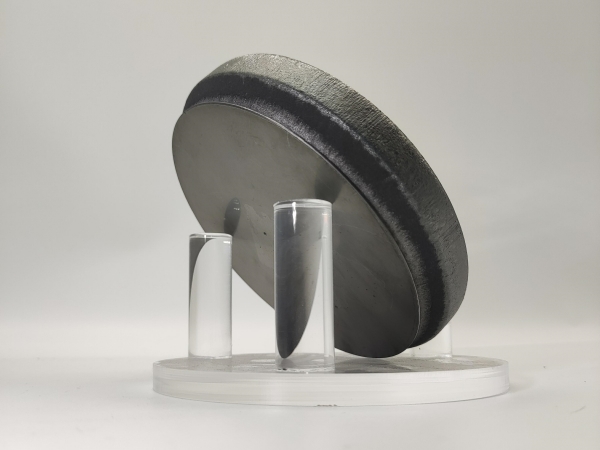
In fields such as high-end manufacturing, electronic communication, and optical engineering, silicon dioxide (SiO₂) materials have become indispensable core substrates due to their excellent physical, chemical, and optical properties. However, despite being composed of SiO₂, single-crystal quartz and fused quartz are vastly different: the former is an ordered crystalline gem, while the latter is an amorphous glassy material. Their differences in microstructure lead to distinct performances and applications, jointly supporting the development of multiple high-end industries. This article comprehensively analyzes the differences and values of single-crystal quartz and fused quartz from three core dimensions—structure, performance, and application—to provide clear selection references for industry practitioners.
I. Microstructure: The Essential Divide Between Order and Disorder
The performance of a material stems from its microstructure. The core difference between single-crystal quartz and fused quartz lies first in the order of atomic arrangement, which is the root cause of all their performance differences.
1. Single-Crystal Quartz: A Long-Range Ordered Crystalline Structure
Single-crystal quartz, also known as crystalline quartz, is essentially an α-quartz (trigonal system) single crystal. Its silicon-oxygen tetrahedra (SiO₄) are arranged in a long-range ordered and periodically repeated structure in three-dimensional space, with no grain boundaries or grains, and exhibit uniform crystalline characteristics as a whole. This ordered structure endows single-crystal quartz with unique anisotropy, meaning its physical properties vary in different directions.
It mainly comes from two sources: one is natural minerals, namely the well-known crystal, which often contains small amounts of impurities such as Al, Fe, and Na; the other is artificial synthesis, prepared by processes such as the hydrothermal method, which can accurately control purity and crystal orientation to meet the needs of high-end industries and scientific research. As a typical piezoelectric crystal, the ordered structure of single-crystal quartz makes it one of the few natural materials that can stably produce a piezoelectric effect, which is its core competitiveness in the electronic field.
2. Fused Quartz: A Short-Range Ordered Amorphous Glass
Fused quartz, also known as vitreous silica, is an artificially prepared amorphous glass. Its atomic arrangement exhibits the characteristics of "long-range disorder and short-range order"—silicon-oxygen tetrahedra can form temporary ordered structures locally, but there is no periodic arrangement as a whole, and no phase transition occurs. This disordered structure gives it isotropy, meaning its physical properties are consistent in all directions.
Its preparation process is extremely strict: high-purity quartz sand or crystal is used as the raw material, melted at a high temperature above 1713℃, and then rapidly cooled to inhibit the crystallization process, ultimately forming an amorphous glassy material. The purity of high-end fused quartz can reach 99.99%~99.999%, and even the alkali metal impurity content can be controlled below 0.01ppb, effectively avoiding the interference of impurities on downstream applications, which is the key to its foothold in the semiconductor field.
II. Core Performance Comparison: Each with Advantages, Adapting to Different Scenarios
Differences in microstructure directly lead to significant differences in the core thermal, optical, and electrical properties of
single-crystal quartz and fused quartz. Their performance characteristics are exactly complementary, covering the harsh requirements of different fields. The following is a detailed comparison from key performance dimensions to clearly present their advantages and differences:
| Performance Dimension |
Single-Crystal Quartz |
Fused Quartz |
| Microstructure |
Crystalline, long-range ordered, anisotropic |
Amorphous, long-range disordered, isotropic |
| Thermal Expansion Coefficient |
Medium (~5.5×10⁻⁶/℃), anisotropic |
Extremely low (~0.5×10⁻⁶/℃), near-zero expansion |
| Thermal Stability |
α→β phase transition at 573℃, with limited high-temperature stability |
No phase transition, stable at 1200℃ for long-term use, with excellent thermal shock resistance |
| Optical Performance |
Birefringent, UV cut-off at ~200nm, suitable for crystal optical applications |
No birefringence, deep UV transmission up to 170nm, with excellent transmittance |
| Electrical Performance |
Strong piezoelectric effect and stable dielectric properties |
No piezoelectricity, extremely low dielectric loss, and excellent insulation properties |
| Purity Level |
Natural crystals contain impurities; synthetic ones have higher purity but are still lower than fused quartz |
Ultra-high purity, total impurities ≤10ppm, and up to ppb level for high-end products |
It can be seen from the performance comparison that the core advantage of single-crystal quartz lies in its piezoelectric effect and crystal optical characteristics, while the core competitiveness of fused quartz is reflected in its extreme thermal stability, ultra-high purity, isotropy, and wide-spectrum transmittance. The performance differences between the two determine the clear division of their application fields.
III. Application Fields: Each Excelling in Its Own Field, Empowering High-End Industries
Based on their respective performance advantages, single-crystal quartz and fused quartz play irreplaceable roles in fields such as electronics, optics, semiconductors, and high-temperature industry, and can be found in daily electronic products and cutting-edge technological equipment.
1. Single-Crystal Quartz: Focus on Piezoelectric and Crystal Optical Fields
The core applications of single-crystal quartz focus on scenarios relying on the piezoelectric effect and crystal optical characteristics, especially in the field of electronic communication. It is widely used to manufacture core components such as quartz crystal oscillators, filters, and sensors. With their stable vibration frequency, quartz crystal oscillators serve as the "time benchmark" for electronic products such as quartz clocks, mobile phones, computers, and radio frequency equipment, ensuring the accuracy of equipment operation. Filters can screen signals of specific frequencies, improving communication quality and supporting 5G and IoT technologies. In the optical field, its birefringence makes it an ideal material for polarizing elements, precision optical prisms, and UV optical windows, which are used in microscopes, spectrometers, and laser equipment. In addition, natural single-crystal quartz (crystal) is used in jewelry decoration due to its unique color and crystal form.
2. Fused Quartz: Supporting Cutting-Edge Fields Such as Semiconductors and High-End Optics
With advantages such as ultra-high purity, extremely low thermal expansion, and strong chemical stability, fused quartz has become the "core cornerstone" of cutting-edge fields such as semiconductors, high-end optics, and high-temperature industry, especially playing an important role in the localization substitution process. In the semiconductor and lithography field, it is an indispensable key material for deep ultraviolet lithography lenses, wafer stages, and etching chambers, directly affecting the accuracy and yield of chip manufacturing. In the high-end optical field, it is used in laser systems, astronomical telescopes, optical fibers, and high-precision optical lens groups, ensuring the stable transmission and precise focusing of optical signals. In the high-temperature industry and new energy field, it is used in precision casting, high-temperature furnace tubes, and photovoltaic crucibles, supporting the development of the photovoltaic and aerospace industries.
IV. Selection Guide: Choose on Demand to Maximize Efficiency
Although
single-crystal quartz and
fused quartz are both SiO₂ materials, their performance and application scenarios differ significantly. The core of selection is to match specific needs. Prioritize single-crystal quartz when a piezoelectric effect, crystal optical characteristics, or crystal orientation is required (e.g., R&D and production of quartz crystal oscillators and polarizing elements). Prioritize fused quartz when extreme thermal stability, near-zero expansion, ultra-high purity, isotropy, wide-spectrum transmittance, or plasma corrosion resistance is needed (e.g., semiconductor lithography equipment, high-end laser systems, and photovoltaic crucibles).
V. Industry Trends and Outlook
With the rapid development of high-end manufacturing, semiconductors, photovoltaics, and aerospace industries, the market demand for
single-crystal quartz and
fused quartz continues to grow, and higher requirements are put forward for material performance. In the field of single-crystal quartz, synthetic technology is constantly upgraded, and high-purity synthetic single-crystal quartz is gradually replacing natural crystal. In the field of fused quartz, the localization process is accelerating, and domestic enterprises have realized the large-scale production of high-end products, breaking the import monopoly. Green manufacturing has become a development trend, reducing energy consumption and costs. In the future, with the advancement of chip processes, laser technology, and photovoltaic efficiency, both materials will achieve more technological breakthroughs and expand their applications in more cutting-edge fields, providing core material support for the high-quality development of high-end manufacturing.

Conclusion: Although single-crystal quartz and
fused quartz are different forms of SiO₂, they exhibit distinct material values due to differences in ordered and disordered structures. From daily electronic equipment to chip manufacturing and aerospace, they silently support the progress of human science and technology, becoming indispensable "invisible cornerstones" of high-end industries. Understanding their differences and advantages, and selecting and applying them accurately, can give full play to the maximum efficiency of the materials and promote the continuous upgrading of related industries.