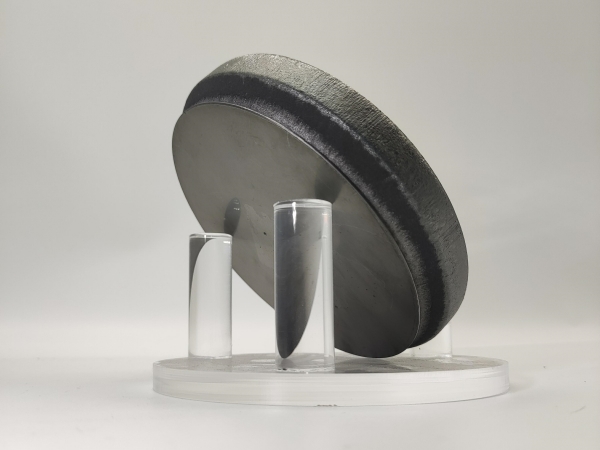
(4H-N / 6H-N / 4H-P / 6H-P / 3C-N / 4H Semi-Insulating)
Silicon carbide (SiC) is a wide-bandgap semiconductor material with more than 200 known polytypes. Among them, 4H, 6H (hexagonal polytypes), and 3C (cubic polytype) are the most widely studied and commercially relevant.
By introducing controlled dopants, SiC substrates can be tailored into n-type, p-type, or semi-insulating materials. The combination of crystal structure and conductivity type directly determines process complexity, material performance, and market application boundaries.
This article systematically compares six representative SiC substrate types, focusing on their manufacturing processes, technical challenges, and market positioning.
.webp)
1. Core Process Technology Comparison (Based on PVT Growth)
At present,
Physical Vapor Transport (PVT) is the dominant industrial method for bulk SiC single-crystal growth, while
CVD is primarily used for epitaxial layers. Process differences among SiC polytypes mainly arise from
growth parameter control, doping strategies, and defect management.
1.1 4H-N Type SiC
Crystal Growth Process
4H polytype control relies on precise coordination between temperature gradients and growth rate. Typical growth temperatures range from
2200–2300 °C, with radial temperature gradients of
5–8 °C/cm and axial gradients of
15–20 °C/cm. Growth rates are maintained at
0.5–1.0 mm/h to ensure stable 4H phase formation.
High-purity argon (≥99.9999%) is used as the growth atmosphere, with chamber pressure controlled at
50–100 mbar to suppress impurity incorporation.
Doping Technology
Nitrogen is used as the donor dopant, typically introduced via
ammonia (NH₃). Doping concentrations are precisely controlled within
1 × 10¹⁸–1 × 10¹⁹ cm⁻³. Real-time monitoring of gas flow and chamber pressure is essential to ensure uniform carrier distribution.
Defect Control
Mature processes can reduce
threading screw dislocation (TSD) density to below
200 cm⁻², with premium-grade wafers achieving TSD and basal plane dislocation (BPD) densities below
50 cm⁻². Optimized seed orientation (<0001> miscut ≤0.5°) and stepwise cooling are key to minimizing thermal stress and stacking faults.
1.2 6H-N Type SiC
Crystal Growth Process
Growth temperatures are slightly lower than for 4H SiC (
2150–2250 °C), with gentler temperature gradients (radial
3–6 °C/cm, axial
12–18 °C/cm) and growth rates of
0.4–0.8 mm/h.
Due to higher thermodynamic stability, 6H polytype control is less demanding and does not require complex temperature feedback systems.
Doping Technology
Nitrogen doping is also used, but 6H SiC is less sensitive to doping fluctuations. Acceptable doping concentrations span
5 × 10¹⁷–5 × 10¹⁹ cm⁻³, resulting in a wider process window and higher mass-production yield.
Defect Control
Overall defect density is comparable to 4H-N SiC, while stacking fault occurrence is slightly lower. However, lower electron mobility is intrinsic to the 6H crystal structure and cannot be fully compensated by process optimization.
1.3 4H-P Type SiC
Crystal Growth Process
Growth temperatures are similar to 4H-N SiC, but the main challenge lies in balancing
p-type doping and polytype stability. Temperature fluctuations must be controlled within
±2 °C, as dopant-induced instability may trigger phase transitions. Chamber pressure is typically increased to
80–120 mbar to improve dopant incorporation efficiency.
Doping Technology
Aluminum is used as the acceptor dopant, commonly introduced via
trimethylaluminum (TMA). Doping levels range from
1 × 10¹⁸ to 5 × 10¹⁹ cm⁻³.
Because aluminum has a high ionization energy (~200 meV) and high vapor pressure,
pulsed doping techniques (pulse cycles of 10–15 s) are applied to improve uniformity and reduce defect formation.
Defect Control
Al doping tends to introduce vacancy-related defects, requiring
high-temperature annealing (1800–1900 °C for ~2 h). Commercial 4H-P products typically show higher BPD densities (
~500–800 cm⁻²) than 4H-N SiC, making defect reduction a key focus of ongoing optimization.
1.4 6H-P Type SiC
Crystal Growth Process
Growth temperatures range from
2100–2200 °C, with gradient settings similar to 6H-N SiC. The 6H structure offers higher tolerance to p-type doping, resulting in better polytype stability and higher process robustness. Growth rates of
0.5–0.9 mm/h enable slightly higher production efficiency than 4H-P SiC.
Doping Technology
Aluminum doping is also used, but the 6H lattice accommodates Al atoms more effectively, leading to lower defect density. Doping concentrations can be adjusted over
5 × 10¹⁷–8 × 10¹⁹ cm⁻³ by controlling TMA flow.
Defect Control
Stacking fault and dislocation densities are slightly lower than in 4H-P SiC. Optimizing hydrogen concentration in the growth atmosphere (
5–10% H₂) further improves surface morphology and crystal flatness.
1.5 3C-N Type SiC
Crystal Growth Process
As a cubic polytype, 3C-SiC requires the lowest growth temperatures (
1800–2000 °C). Powder feedstock is typically prepared via low-temperature carbothermal reduction or direct Si–C reaction, followed by PVT growth.
Polytype control is extremely challenging, with frequent mixed-phase inclusions (e.g., 4H domains). Strict cooling rate control (≤2 °C/min) and seed pretreatment via vacuum annealing are essential.
Doping Technology
Nitrogen or phosphorus can be used as donor dopants. Phosphorus doping offers higher electron mobility, with concentrations typically between
1 × 10¹⁷ and 1 × 10¹⁹ cm⁻³. Due to poor bulk crystal quality,
CVD epitaxial overgrowth is often required to improve surface carrier distribution.
Defect Control
Defect densities are significantly higher than in hexagonal SiC, with dislocation densities often exceeding
1 × 10⁴ cm⁻². While surface quality can be improved via epitaxy, bulk defect suppression remains largely at the R&D stage.
Crystal Growth Process
Growth temperatures are similar to 4H-N SiC (
2200–2300 °C), with key differences in atmosphere control and post-growth treatment. A mixed atmosphere of high-purity argon and nitrogen (
1–3% N₂) at
100–150 mbar is used to induce semi-insulating behavior.
Electrical Isolation Control
Rather than heavy acceptor doping, semi-insulating properties are achieved by limiting residual nitrogen concentration (≤
5 × 10¹⁶ cm⁻³) and introducing deep-level traps (commonly via vanadium impurities). Electrical resistivity can reach
1 × 10¹¹–1 × 10¹³ Ω·cm.
Defect Control
Defect sensitivity is extremely high. TSD density must be kept below
50 cm⁻² to avoid leakage paths. Post-growth
high-temperature annealing (2000 °C, 4 h) and
CMP polishing are required to ensure uniform insulation.
2. Market Applications and Technology Maturity
2.1 4H-N Type SiC
Key Properties: 3.3 eV bandgap, 2.2 MV/cm breakdown field, 1000–1200 cm²/V·s mobility
Market Status: Most mature and widely adopted SiC substrate
Applications: EV power modules, PV inverters, industrial power supplies, 5G RF devices
Market Share: >60% of conductive SiC substrates
2.2 6H-N Type SiC
Applications: High-temperature sensors, UV detectors, low-end power electronics
Market Share: ~15–20% of conductive SiC substrates
2.3 4H-P Type SiC
Applications: High-voltage diodes, vertical MOSFET structures
Market Share: <5%, mostly customized products
2.4 6H-P Type SiC
Applications: Aerospace, nuclear, radiation-resistant devices
Market Share: <3%, niche applications
2.5 3C-N Type SiC
Applications: Experimental high-frequency RF and UV optoelectronics
Market Penetration: <1%, R&D stage
2.6 4H Semi-Insulating SiC
Applications: 5G/6G RF power amplifiers, microwave and radar systems
Market Share: ~27% of total SiC substrate market

3. Summary and Future Trends
The differences among SiC polytypes arise from the
combined effects of crystal structure and doping technology.
4H-N SiC dominates power electronics due to its balanced performance and mature processes
6H SiC targets cost-sensitive and optoelectronic applications
P-type SiC remains limited by doping challenges
3C-SiC offers excellent high-frequency potential but is constrained by defects
4H semi-insulating SiC is the cornerstone substrate for high-end RF devices
Future development will focus on:
8-inch and larger 4H-N and semi-insulating substrates with lower cost and defect density
Breakthroughs in p-type doping technologies
Improved polytype control and defect suppression for 3C-SiC, unlocking its ultra-high-frequency potential