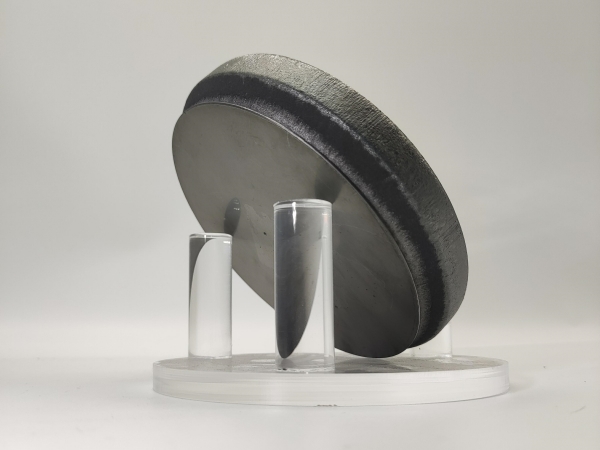
Gallium nitride (GaN) is a third-generation wide-bandgap semiconductor widely used in high-frequency, high-voltage, and high-power applications. The performance of GaN-based devices is fundamentally determined by the quality of the epitaxial layers, which in turn is strongly influenced by the choice of substrate material.
Key substrate properties—such as lattice constant, thermal expansion coefficient, and thermal conductivity—directly affect MOCVD (Metal–Organic Chemical Vapor Deposition) process design, defect density in the epitaxial layers, and the ultimate performance limits of GaN devices.
This article provides a clear comparison of how sapphire, silicon carbide, silicon, native GaN, and emerging substrates impact GaN epitaxial growth and application performance.

1. Impact of Mainstream Substrate Materials
Epitaxial Growth Characteristics
Sapphire remains the most widely used substrate for GaN epitaxy in optoelectronic applications due to its high thermal stability (melting point ~2050 °C), excellent chemical resistance, mature manufacturing processes, and moderate cost.
In MOCVD growth, sapphire substrates require only a thin low-temperature GaN buffer layer (typically 10–20 nm) to partially relieve lattice mismatch (~13%) and thermal mismatch (~25%) with GaN. Growth temperatures are usually maintained between 1050 °C and 1100 °C, which enhances adatom mobility and promotes dense, high-quality crystal growth. Since sapphire is intrinsically insulating, it naturally supports insulating-substrate device structures without additional isolation steps.
Epitaxial quality can be further improved through substrate surface pretreatment. Chemical etching using molten KOH creates patterned surface features that enable lateral epitaxial overgrowth, significantly reducing dislocation density. As a result, XRD FWHM values decrease and both crystalline quality and optical transparency improve. Controlled reactor pressure and gradual, stepwise cooling are essential to prevent thermal-stress-induced cracking.
Performance and Application Limits
Sapphire-based GaN epitaxial layers typically achieve dislocation densities in the range of 10⁸–10⁹ cm⁻² and offer excellent optical transparency, making them ideal for LEDs and UV optoelectronic devices.
However, sapphire has relatively poor thermal conductivity (~25 W/(m·K) at 100 °C), which limits heat dissipation in high-power devices. In addition, sapphire only supports lateral current conduction, restricting current density and integration for power electronics.
As a result, sapphire substrates are mainly used in low- to mid-power optoelectronic applications rather than high-power RF devices.
Epitaxial Growth Characteristics
Silicon carbide substrates offer much better lattice matching with GaN (mismatch ~3.5%) and extremely high thermal conductivity (up to 490 W/(m·K)), making them a premium choice for high-frequency and high-power GaN devices.
MOCVD growth on SiC focuses on interface quality and defect suppression. Advanced techniques such as ion-implantation-induced nucleation (I3N) can promote layer-by-layer AlN growth, resulting in atomically smooth interfaces and reduced thermal resistance.
Typical epitaxial stacks are relatively thin, which further improves thermal management. Tight control of temperature and ambient conditions is essential to prevent interfacial reactions and defect formation.
Performance and Application Scenarios
GaN epitaxial layers on SiC exhibit very low defect densities (below 1.7 × 10⁸ cm⁻²) and excellent heat dissipation. GaN HEMT devices on SiC demonstrate outstanding RF performance, with high output power density, high efficiency, and operating voltages exceeding 100 V.
These advantages make SiC substrates ideal for applications such as 5G/6G base station power amplifiers, electric vehicle power modules, and grid-level high-voltage systems.
The main drawback is cost—SiC substrates are expensive and difficult to process, limiting large-scale adoption.
Epitaxial Growth Characteristics
Silicon substrates are attractive due to their low cost, availability in large diameters (8-inch and above), and compatibility with existing CMOS manufacturing infrastructure. They are a key platform for cost-effective, large-scale GaN power devices.
However, silicon has the largest lattice mismatch (~17%) and thermal mismatch (~54%) with GaN. As a result, MOCVD growth relies heavily on complex buffer-layer structures and precise stress management to prevent cracking and wafer warpage.
Advanced silicon materials such as A-MCz® wafers, optimized crystal orientation (typically ⟨111⟩), and carefully engineered AlGaN or superlattice buffer layers are critical for achieving stable epitaxial growth. SOI (silicon-on-insulator) substrates further improve isolation and reduce parasitic effects, enhancing overall device reliability.
Performance and Application Scenarios
GaN-on-silicon epitaxial layers typically exhibit higher dislocation densities (10⁹–10¹⁰ cm⁻²) than sapphire or SiC, but silicon offers good thermal conductivity (~150 W/(m·K)), supports vertical device architectures, and enables seamless integration with CMOS processes.
These strengths make silicon substrates well suited for medium-power applications such as consumer power management ICs, onboard chargers for electric vehicles, and industrial power supplies—where cost and scalability are critical.
lNative GaN Substrates
Native GaN substrates provide perfect lattice and thermal matching with GaN epitaxial layers, enabling the simplest MOCVD processes and the highest material quality. Dislocation densities can be reduced to below 10⁶ cm⁻², approaching GaN’s theoretical performance limits.
However, bulk GaN substrates are extremely difficult and costly to manufacture, with limited wafer sizes and low production yield. As a result, their use is currently restricted to laboratory research and niche, high-end devices such as advanced lasers and detectors.
2. Emerging Substrate Materials
Diamond substrates offer exceptional thermal conductivity (>2000 W/(m·K)) and are being explored for ultra-high-power GaN devices. However, severe lattice mismatch, high cost, and limited wafer size keep them in the research stage.
Boron arsenide (BAs) substrates combine high thermal conductivity with better lattice matching than silicon, showing promise for future high-power GaN applications. At present, material growth and defect control remain major challenges.
3. Substrate Comparison at a Glance
| Substrate |
Lattice Mismatch |
Dislocation Density |
Key Advantages |
Typical Applications |
| Sapphire |
~13% |
10⁸–10⁹ cm⁻² |
Mature process, excellent optics |
LEDs, UV detectors |
| SiC |
~3.5% |
~10⁸ cm⁻² |
High thermal conductivity, RF performance |
5G RF, power modules |
| Silicon |
~17% |
10⁹–10¹⁰ cm⁻² |
Low cost, large wafers, CMOS compatible |
Power ICs, EV chargers |
| Native GaN |
0% |
≤10⁶ cm⁻² |
Near-theoretical performance |
High-end lasers |
4. Summary and Outlook
The choice of substrate plays a decisive role in GaN epitaxial growth complexity and device performance. Sapphire dominates optoelectronics, SiC leads high-performance RF and power devices, silicon enables large-scale and cost-sensitive applications, while native GaN defines the ultimate performance ceiling.
Future development will focus on both optimizing existing substrates—such as improved buffer-layer designs and cost reduction—and exploring new high-thermal-conductivity materials. These advances will further unlock GaN’s potential in high-frequency, high-voltage, and high-power applications.