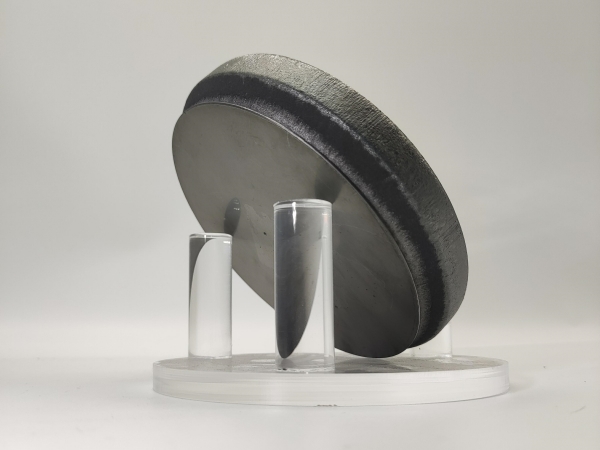
In today’s optoelectronics and semiconductor industries, sapphire (Al₂O₃) has become an indispensable foundational material thanks to its exceptional physical, chemical, and optical properties. From high-brightness LED lighting to advanced RFICs, and even precision consumer-electronics windows, the size and specifications of sapphire substrates directly influence downstream performance and cost efficiency.
This article provides an in-depth look at mainstream sapphire substrate dimensions and highlights our capabilities in flexible, high-precision customization.

With continuous advances in crystal growth and wafer-processing technologies, sapphire substrates have evolved into a highly standardized dimensional system—primarily designed to fit automated semiconductor fabrication equipment (FABs).
These remain the most mature and widely used sizes in the market.
Primary applications: GaN-based LED epitaxy
Advantages: Extremely mature processing technology and highly optimized cost structure; the foundation of general lighting and backlight industries
Driven by the rise of Micro-LED and Mini-LED technologies, demand for larger wafers continues to grow.
Primary applications: High-end Micro-LED display technology, power electronics
Advantages: Larger wafer area reduces edge-related losses and significantly improves die throughput
The 8-inch sapphire wafer represents the current high-end standard for large-scale mass production.
Primary applications: Silicon-on-sapphire (SOS) RF chips widely used in 5G communications and smartphone antenna tuning
Technical thresholds: Extremely stringent requirements on crystal integrity, TTV (Total Thickness Variation), and wafer warp
While standard sizes dominate mainstream manufacturing, many research programs, specialized optical instruments, and niche semiconductor processes require specifications that deviate from industry norms.
Innovation should never be constrained by standard wafers. In addition to mainstream dimensions, we offer comprehensive customization services for non-standard sapphire substrates.
Certain legacy epitaxy tools or specialized research reactor chambers require intermediate or uncommon dimensions.
3-inch (76.2 mm): Fills the gap between 2-inch and 4-inch; commonly used for specific-wavelength laser development
5-inch (125 mm): A transitional size between 4-inch and 6-inch, for which we possess extensive processing experience
Not all applications require full wafers. For optical windows, thermal spreaders, or miniature sensor carriers, we offer precision dicing and shaping services.
Size range: Custom pieces as small as 2 mm × 2 mm, including square or circular windows
Precision: Dimensional tolerances controlled to the micron level, with strict chipping control
Beyond lateral dimensions (diameter/edge length), we also support customization of wafer thickness (from ultra-thin 100 µm to >1 mm) and special crystal orientations (A-plane, R-plane, M-plane), enabling non-polar epitaxy or tailored optical behavior.
Whether you need standard 8-inch wafers for high-volume manufacturing, a unique 3-inch substrate for laboratory R&D, or miniature sapphire windows for precision optical equipment, we JXT Technology Co.,Ltd. deliver high-quality, application-ready solutions.
Contact us to start your tailored sapphire substrate project.
1. Technical OverviewSingle-crystal diamond substrate wafers feature grain-boundary-free...
1. Technical OverviewFeaturing superior comprehensive physical and chemical properties, ...
With the continuous upgrading of high-power continuous-wave lasers, pulsed lasers, and h...